| Home | > | List of families | > | Adiantaceae | > | Adiantum | > | raddianum |
Adiantum raddianum
Selected images: Click on each image to see a larger version and details of the record View all images (8)
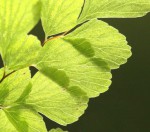
Photo: Petra Ballings
Camp site, Chirinda Forest

Photo: Petra Ballings
Camp site, Chirinda Forest

Photo: Petra Ballings
Camp site, Chirinda Forest
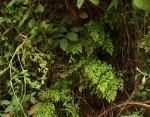
Photo: Petra Ballings
Road from Mt Selinda to Espungabera border post

Photo: Petra Ballings
Road from Mt Selinda to Espungabera border post
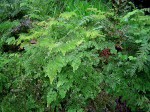
Photo: Petra Ballings
Ndundu Lodge, Vumba
Detailed records: Display species records QDS maps by: Google Maps Point records by Google Maps
Species details: Click on each item to see an explanation of that item (Note: opens a new window)
| Synonyms: |
Adiantum cuneatum Langsd. & Fisch. |
| Common names: | |
| Frequency: | |
| Status: | Naturalised |
| Description: |
Rhizome short, creeping; rhizome scales brown, lanceolate, entire. Fronds closely spaced to tufted, thinly herbaceous, arching. Stipe up to 25 cm long, thin, shiny, dark brown to black, glabrous. Lamina 3-4 pinnate, triangular to broadly ovate in outline, 10-25 × 8-15 cm, glabrous. Rhachis and stalks black, glabrous. Pinnules persistent, 1.2 × 1 cm, obcuneate to trapeziform with straight sides, outer margin irregularly incised into rounded lobes with toothed margins, veins ending in the sinuses of the marginal serrations. Sori on the outer margins of ultimate segments, indusial flaps broadly overlapping the sori, kidney shaped to circular, c. 1.5 mm in diameter. |
| Notes: | The small persistent pinnules, serrated outer margin with the veins ending in between the serrations and the reniform to almost circular sori distinguish A. raddianum from similar species. |
| Derivation of specific name: | raddianum: named after Guiseppe Raddi (1770-1829), Italian botanist who collected in Brazil from where the type originates. |
| Habitat: | Terrestrial, shaded moist earthbanks, roadcuttings and streambanks in forest. |
| Altitude range: | 100 - 1700 m |
| Worldwide distribution: | Native to South America, widely escaped throughout the moister regions of Africa. |
| Mozambique distribution: | Z,MS |
| Growth form(s): | Terrestrial. |
| Endemic status: | |
| Red data list status: | |
| Insects associated with this species: | |
| Spot characters: | Display spot characters for this species |
| Literature: |
Burrows, J.E. (1990). Southern African Ferns and Fern Allies. Frandsen, Sandton. Page 126. (Includes a picture). Burrows, J.E. & Burrows, S.M. (1993). An annotated check-list of the pteridophytes of Malawi Kirkia 14(1) Page 86. Burrows, J.E. & Willis, C.K. (eds) (2005). Plants of the Nyika Plateau Southern African Botanical Diversity Network Report No. 31 SABONET, Pretoria Page 38. Chapano, C. & Mamuto, M. (2003). Plants of the Chimanimani District National Herbarium and Botanic Garden, Zimbabwe Page 3. Crouch, N.R., Klopper, R.R., Burrows, J.E. & Burrows, S.M. (2011). Ferns of Southern Africa, A comprehensive guide Struik Nature Pages 436 - 437. (Includes a picture). Da Silva, M.C., Izidine, S. & Amude, A.B. (2004). A preliminary checklist of the vascular plants of Mozambique. Southern African Botanical Diversity Network Report No. 30 Sabonet, Pretoria Page 143. Jacobsen, W.B.G. (1983). The Ferns and Fern Allies of Southern Africa. Butterworths, Durban and Pretoria. Pages 232 - 233. (Includes a picture). Mapaura, A. & Timberlake, J. (eds) (2004). A checklist of Zimbabwean vascular plants Southern African Botanical Diversity Network Report No. 33 Sabonet, Pretoria and Harare Page 9. Roux, J.P. (2001). Conspectus of Southern African Pteridophyta. Southern African Botanical Diversity Network Report 13 Page 77. Roux, J.P. (2009). Synopsis of the Lycopodiophyta and Pteridophyta of Africa, Madagascar and neighbouring islands Page 70. Schelpe, E.A.C.L.E. (1970). Pteridophyta Flora Zambesiaca Page 113. |
Other sources of information about Adiantum raddianum:
Our websites:
Flora of Malawi: Adiantum raddianumFlora of Zimbabwe: Adiantum raddianum
External websites:
African Plants: A Photo Guide (Senckenberg): Adiantum raddianumAfrican Plant Database: Adiantum raddianum
BHL (Biodiversity Heritage Library): Adiantum raddianum
EOL (Encyclopedia of Life): Adiantum raddianum
GBIF (Global Biodiversity Information Facility): Adiantum raddianum
Google: Web - Images - Scholar
iNaturalist: Adiantum raddianum
IPNI (International Plant Names Index): Adiantum raddianum
JSTOR Plant Science: Adiantum raddianum
Mansfeld World Database of Agricultural and Horticultural Crops: Adiantum raddianum
Plants of the World Online: Adiantum raddianum
Tropicos: Adiantum raddianum
Wikipedia: Adiantum raddianum
| Home | > | List of families | > | Adiantaceae | > | Adiantum | > | raddianum |