| Home | > | List of families | > | Celastraceae | > | Gymnosporia | > | mossambicensis |
Gymnosporia mossambicensis
mossambicensis
Selected images: Click on each image to see a larger version and details of the record View all images (13)
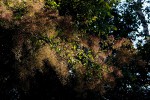
Photo: Bart Wursten
Ndzou Camp, Moribane Forest
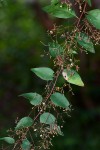
Photo: Bart Wursten
Ndzou Camp, Moribane Forest
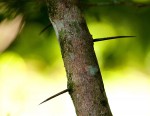
Photo: Bart Wursten
Ndzou Camp, Moribane Forest
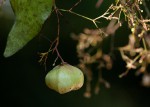
Photo: Bart Wursten
Ndzou Camp, Moribane Forest
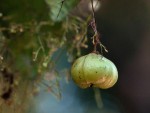
Photo: Bart Wursten
Ndzou Camp, Moribane Forest
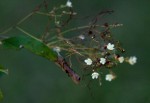
Photo: Bart Wursten
Ndzou Camp, Moribane Forest
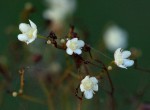
Photo: Bart Wursten
Ndzou Camp, Moribane Forest
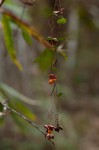
Photo: Bart Wursten
Moribane Forest
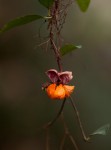
Photo: Bart Wursten
Moribane Forest
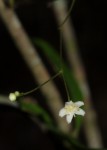
Photo: Bart Wursten
Swanepoel Concession, Cheringoma
Detailed records: Display species records QDS maps by: Google Maps Point records by Google Maps
Species details: Click on each item to see an explanation of that item (Note: opens a new window)
| Synonyms: |
Celastrus concinnus N.E. Br. Celastrus huillensis sensu Steedman Celastrus mossambicensis Klotzsch Maytenus mossambicensis (Klotzsch) Blakelock var. mossambicensis |
| Common names: | Long-spined maytenus (English) |
| Frequency: | |
| Status: | Native |
| Description: |
Multi-stemmed shrub, armed or with straight spines up to 8 cm long. Branches reddish-brown, with pale lenticels when young. Leaves green, up to c. 5 × 2.5 cm, ovate-lanceolate, ovate to almost round, hairless; margins irregularly crenate-dentate; stipules triangular, small and inconspicuous. Inflorescences lax, axillary, branched, usually much longer than the leaves. Flowers white. Fruit a semi-fleshy, 3-lobed capsule, pendulous on a long stalk, greenish-white to reddish brown or carmine when ripe. |
| Notes: | This species is superficially similar to G. harveyana with which it has long been considered conspecific. It is however fairly easily distinguished by the much more lax and longer inflorescences which are usually much longer than the leaves; the absence of conspicuous thread-like stipules and the almost 3-sided fruits. |
| Derivation of specific name: | mossambicensis: of Mozambique |
| Habitat: | in thickets, Brachystegia and mixed woodland and along the margins of low-altitude forest. |
| Altitude range: | Up to 1000 m |
| Flowering time: | most of the year |
| Worldwide distribution: | Tanzania, Malawi, Mozambique, Zimbabwe and Limpopo, South Africa. |
| Mozambique distribution: | N,Z,MS,GI |
| Growth form(s): | |
| Endemic status: | |
| Red data list status: | |
| Insects associated with this species: | |
| Spot characters: | Display spot characters for this species |
| Literature: |
Burrows, J.E., Burrows, S.M., Lötter, M.C. & Schmidt, E. (2018). Trees and Shrubs Mozambique Publishing Print Matters (Pty), Cape Town. Page 508. As Gymnosporia mossambicensis (Includes a picture). Chapano, C. & Mamuto, M. (2003). Plants of the Chimanimani District National Herbarium and Botanic Garden, Zimbabwe Page 29. As Gymnosporia mossambicensis Dowsett-Lemaire, F. (1989). The flora and phytogeography of the evergreen forests of Malawi. I: Afromontane and mid-altitude forests; Bull. Jard. Bot. Nat. Belg. 59(1/2) Page 22. As Maytenus mossambicensis Dowsett-Lemaire, F. & White, F. (1990). New and noteworthy plants from the evergreen forests of Malawi Bull. Jard. Bot. Nat. Belg. 60(1/2) Page 76. as Maytenus mossambicensis Drummond, R.B. (1975). A list of trees, shrubs and woody climbers indigenous or naturalised in Rhodesia. Kirkia 10(1) Page 255. As Maytenus mossambicensis mossambicensis Mapaura, A. & Timberlake, J. (eds) (2004). A checklist of Zimbabwean vascular plants Southern African Botanical Diversity Network Report No. 33 Sabonet, Pretoria and Harare Page 33. Robson, N.K.B. (1966). Celastraceae Flora Zambesiaca 2(2) Page 362. As Maytenus mossambicensis mossambicensis Steedman, E.C. (1933). Some Trees, Shrubs and Lianes of Southern Rhodesia. Page 41. as Celastrus huillensis (Includes a picture). |
Other sources of information about Gymnosporia mossambicensis subsp. mossambicensis:
Our websites:
Flora of Malawi: Gymnosporia mossambicensis subsp. mossambicensisFlora of Zimbabwe: Gymnosporia mossambicensis subsp. mossambicensis
External websites:
African Plants: A Photo Guide (Senckenberg): Gymnosporia mossambicensisBHL (Biodiversity Heritage Library): Gymnosporia mossambicensis
EOL (Encyclopedia of Life): Gymnosporia mossambicensis
GBIF (Global Biodiversity Information Facility): Gymnosporia mossambicensis
Google: Web - Images - Scholar
iNaturalist: Gymnosporia mossambicensis
IPNI (International Plant Names Index): Gymnosporia mossambicensis
JSTOR Plant Science: Gymnosporia mossambicensis
Mansfeld World Database of Agricultural and Horticultural Crops: Gymnosporia mossambicensis
Plants of the World Online: Gymnosporia mossambicensis
Tropicos: Gymnosporia mossambicensis
Wikipedia: Gymnosporia mossambicensis
| Home | > | List of families | > | Celastraceae | > | Gymnosporia | > | mossambicensis |