| Home | > | List of families | > | Malvaceae subfamily Malvoideae | > | Hibiscus | > | engleri |
Hibiscus engleri
Selected images: Click on each image to see a larger version and details of the record View all images (9)
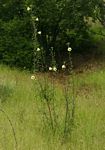
Photo: Bart Wursten
Nr Tuli police camp
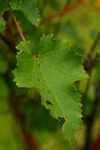
Photo: Bart Wursten
Nr Tuli police camp
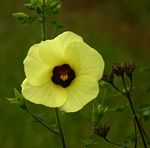
Photo: Bart Wursten
Nr Tuli police camp
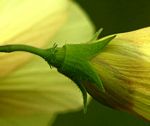
Photo: Bart Wursten
Nr Tuli police camp
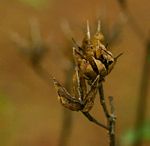
Photo: Bart Wursten
Nr Tuli police camp
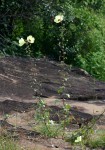
Photo: Bart Wursten
Malilangwe Wildlife Reserve
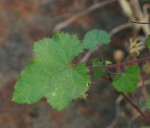
Photo: Bart Wursten
Malilangwe Wildlife Reserve
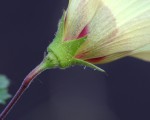
Photo: Bart Wursten
Malilangwe Wildlife Reserve
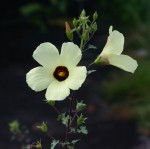
Photo: Bart Wursten
Malilangwe Wildlife Reserve
Detailed records: Display species records QDS maps by: Google Maps Point records by Google Maps
Species details: Click on each item to see an explanation of that item (Note: opens a new window)
| Synonyms: |
Hibiscus cordatus Harv. Hibiscus irritans R.A. Dyer Hibiscus microcylicinus Engl. Hibiscus subphysaloides Hochr. |
| Common names: | |
| Frequency: | |
| Status: | Native |
| Description: |
Erect herb, up to 1.5 m tall. Stems with yellowish simple and stellate, irritant hairs. Leaves ovate to almost round in outline, up to 9 × 8 cm, shallowly to deeply 3-5-lobed or 3-5-angled, with stellate and simple bristly hairs on both surfaces; base cordate; margin irregularly toothed. Petiole up to 8 cm long with hairs like the stems. Flowers solitary in the upper leaf axils, often forming apparent terminal racemes, yellow with a maroon or dark red centre, 5-6 cm in diameter. Epicalyx bracts 7-10, very short, up to 3.5 mm long, filiform. Calyx up to 16 mm long; lobes triangular, joined at the base for 7-8 mm. Fruit an ellipsoid capsule, 15 × 9 mm, bristly hairy, carpels awned up to 3 mm. |
| Notes: | |
| Derivation of specific name: | engleri: named after Dr Prof Heinrich Gustav Adolf Engler (1844-1930), German Director of the Royal Botanical Gardens in Berlin, who initiated extensive botanical exploration in Africa. |
| Habitat: | Dry open woodland and scrub. |
| Altitude range: | |
| Flowering time: | Dec - May |
| Worldwide distribution: | Tropical Africa, tropical Asia and Madagascar |
| Mozambique distribution: | M |
| Growth form(s): | Perennial. |
| Endemic status: | |
| Red data list status: | |
| Insects associated with this species: | |
| Spot characters: | Display spot characters for this species |
| Literature: |
Chapano, C. & Mugarisanwa, N.H. (2003). Plants of the Matobo District National Herbarium and Botanic Garden, Zimbabwe Page 20. Exell, A.W. (1961). Malvaceae Flora Zambesiaca 1(2) Pages 467 - 468. Kirby, G. (2013). Wild Flowers of Southeast Botswana Struik Nature, Cape Town South Africa Page 201. (Includes a picture). Mapaura, A. & Timberlake, J. (eds) (2004). A checklist of Zimbabwean vascular plants Southern African Botanical Diversity Network Report No. 33 Sabonet, Pretoria and Harare Page 60. Setshogo, M.P. (2005). Preliminary checklist of the plants of Botswana. Sabonet Report no. 37. Sabonet, Pretoria and Gaborone Page 84. |
Other sources of information about Hibiscus engleri:
Our websites:
Flora of Botswana: Hibiscus engleriFlora of Zimbabwe: Hibiscus engleri
External websites:
African Plants: A Photo Guide (Senckenberg): Hibiscus engleriAfrican Plant Database: Hibiscus engleri
BHL (Biodiversity Heritage Library): Hibiscus engleri
EOL (Encyclopedia of Life): Hibiscus engleri
GBIF (Global Biodiversity Information Facility): Hibiscus engleri
Google: Web - Images - Scholar
iNaturalist: Hibiscus engleri
IPNI (International Plant Names Index): Hibiscus engleri
JSTOR Plant Science: Hibiscus engleri
Mansfeld World Database of Agricultural and Horticultural Crops: Hibiscus engleri
Plants of the World Online: Hibiscus engleri
Tropicos: Hibiscus engleri
Wikipedia: Hibiscus engleri
| Home | > | List of families | > | Malvaceae subfamily Malvoideae | > | Hibiscus | > | engleri |