Crotalaria nigricans
nigricans
Selected images: Click on each image to see a larger version and details of the record View all images (5)
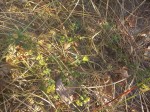
Habit
Riverine forest margin
Lunzua River, Mpulungu
Aug 2022
Photo: Nick Wightman
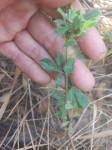
Leaves
Riverine forest margin
Lunzua River, Mpulungu
Aug 2022
Photo: Nick Wightman
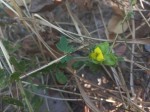
Flower
Riverine forest margin
Lunzua River, Mpulungu
Aug 2022
Photo: Nick Wightman
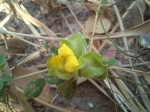
Flower
Riverine forest margin
Lunzua River, Mpulungu
Aug 2022
Photo: Nick Wightman
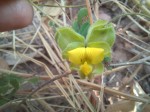
Flower
Riverine forest margin
Lunzua River, Mpulungu
Aug 2022
Photo: Nick Wightman
Detailed records: Display species records QDS maps by: Google Maps Point records by Google Maps
Species details: Click on each item to see an explanation of that item (Note: opens a new window)
| Synonyms: | |
| Common names: | |
| Frequency: | |
| Status: | Native |
| Description: |
Prostrate to erect perennial herb, much branched, branches up to 1.5 m long, with fine spreading hairs; leaves 3-foliolate, petioles 2-6 mm long; leaflets 1-3 x 0.5-1.2 cm, oblanceolate to oblong-obovate, sparsely pubescent above and thinly hairy beneath; stipules 3-6 mm long, lanceolate; flowers in 4-12 sessile or shortly pedunculate terminal heads; bracts 4-9 mm, ovate; calyx 4 lobed, 8-13 mm long, almost enclosing the corolla, pubescent, lobes 2-3 times as long as tube; standard circular-ovate to oblate, usually pale yellow, reddish-tinged and puberulous along the midvein outside towards the apex; wings longer than keel; keel 8-10 mm long, rounded about the middle and with a short incurved beak; pod enveloped by calyx, sessile, 7-10 mm long, ellipsoid, spreading hairy, c. 4-8 seeded; seeds c. 2.5 mm long, obliquely cordiform, smooth, mauvish-brown. Var. nigricans differs in having prostrate stems radiating from a rather woody taproot and inflorescences never more than a few centimetres from the ground. |
| Type location: |
Tanzania |
| Notes: | |
| Derivation of specific name: | nigricans: blackish, presumably referring to the tendency of the plants to turn blackish upon drying in the press. |
| Habitat: | |
| Altitude range: (metres) | |
| Flowering time: | Apr - Sep |
| Worldwide distribution: | DRC (Katanga) and Tanzania south through Malawi, Mozambique and Zambia. |
| FZ divisions: | N |
| Growth form(s): | |
| Endemic status: | |
| Red data list status: | |
| Insects associated with this species: | |
| Spot characters: | Display spot characters for this species |
| Literature: |
Martins, E.S. et al. (2003). Papilionoideae Flora Zambesiaca 3(7) Pages 130 - 132. |
Other sources of information about Crotalaria nigricans var. nigricans:
Our websites:
Flora of Malawi: Crotalaria nigricans var. nigricansFlora of Zambia: Crotalaria nigricans var. nigricans
External websites:
African Plants: A Photo Guide (Senckenberg): Crotalaria nigricansAfrican Plant Database: Crotalaria nigricans
BHL (Biodiversity Heritage Library): Crotalaria nigricans
EOL (Encyclopedia of Life): Crotalaria nigricans
GBIF (Global Biodiversity Information Facility): Crotalaria nigricans
Google: Web - Images - Scholar
iNaturalist: Crotalaria nigricans
IPNI (International Plant Names Index): Crotalaria nigricans
JSTOR Plant Science: Crotalaria nigricans
Mansfeld World Database of Agricultural and Horticultural Crops: Crotalaria nigricans
Plants of the World Online: Crotalaria nigricans
Tropicos: Crotalaria nigricans
Wikipedia: Crotalaria nigricans